
Here, "perfume label" refers to wax-based, alcohol- and water-free solid perfumes — a compact fragrance stick that melts against the skin instead of spraying out of a bottle. The format suits anyone who wants a vegan, plastic-free, travel-friendly scent without unnecessary additives. The right label clearly shows the wax source, fragrance oils, and packaging material. Not sure which scent suits you? A sample kit is the cheapest way to find out.
In short:
- Solid perfume is alcohol- and water-free, which means the scent is released slowly through body heat and lasts a long time close to the skin.
- A vegan variant means the wax is plant-based and no animal-derived fragrance ingredients like musk appear in the ingredient list.
- The packaging is often cardboard or metal, which reduces plastic use and climate impact, and makes the product travel-friendly.
- Apply to pulse points after gently warming between your fingers, and store cool to preserve the scent.
- When choosing a scent, check the wax source, the origin of the fragrance oils, and certifications, and try several scents via a sample kit before buying full size.
Table of contents
- What is a wax-based solid perfume and how does it work?
- Why choose vegan, plastic-free solid perfume?
- How do you read a perfume label for vegan and plastic-free status?
- How to apply solid perfume for the best scent and longevity
- How to choose the right solid perfume for your needs
- Why we make our perfumes the way we do
- Recommended scents to start with
- Sources
- Frequently asked questions
What is a wax-based solid perfume and how does it work?
A solid perfume is built from four main parts: wax for structure, butters and carrier oil for a smooth texture, and fragrance oil for the scent itself. No alcohol and no water are involved, which radically sets the format apart from a typical spray bottle.
The scent is released through body heat. When the stick meets the skin, a thin film of balm melts and releases the fragrance oils gradually, instead of evaporating quickly the way alcohol-based perfumes do. This gives a closer-to-skin projection, meaning the scent stays nearer the body and spreads less into the room.

The effect is noticeable right away: solid perfume smells more discreet but can last just as long or longer than a spray, often 3–6 hours depending on the formula. For anyone who wants to smell good without filling an entire conference room, that's the whole point.
Why choose vegan, plastic-free solid perfume?
Vegan perfume contains no animal ingredients at all, whether in the wax base, carrier oil, or fragrance compounds. It sounds simple, but vegan doesn't automatically mean "100% natural", since synthetic fragrance molecules can also be vegan. What you're actually looking for is the absence of beeswax, musk, and other animal-derived raw materials.
The environmental argument is as much about the packaging as the contents. A solid fragrance stick in cardboard or metal weighs less and requires less plastic than a glass bottle with a pump, pump head, and secondary packaging. This reduces both waste and shipping weight, a detail rarely mentioned in marketing but which carries real weight in overall climate impact.
The benefits, summarized:
- Skin-friendly formula: an alcohol-free base means skin doesn't dry out or feel tight the way it can with spray perfume.
- Smaller packaging: a compact stick instead of a glass bottle with a pump.
- Travel-friendly: no liquid restrictions, since the format doesn't count as a liquid.
- Discreet scent: the projection stays close to the skin, perfect for the office and for flying.
How do you read a perfume label for vegan and plastic-free status?
The ingredient list, often called INCI, is usually printed on the back of the packaging or in the online product description. There you'll find the wax type, carrier oil, and fragrance compounds listed in descending order by quantity — the ingredient listed first makes up the largest share of the product.
- Check the wax source. Beeswax (cera alba) is not vegan. Plant-based waxes like candelilla or carnauba are, but they require different melting points during manufacturing, which affects the texture.
- Look for the origin of the fragrance oils. Terms like "essential oils" or "botanical extracts" point to plant-based fragrance ingredients, while vague wording like just "perfume" or "fragrance" hides the exact composition.
- Review certifications with a critical eye. Labels like COSMOS signal organic or vegan requirements, but standards vary between certifications, so a certification is no guarantee that everything in the tin is organic.
- Read the packaging claims. If it says "recyclable," "plastic-free," or "refillable," that's concrete information, not marketing talk.
Pro tip: If you only see "natural ingredients" without a single ingredient actually named, that's a warning sign. An honest label always lists the wax, carrier oil, and fragrance ingredients by name.
How to apply solid perfume for the best scent and longevity
Warm the stick between your fingertips for a few seconds before applying. Body heat softens the wax so it spreads more evenly, which lets the fragrance oils release faster on the skin.
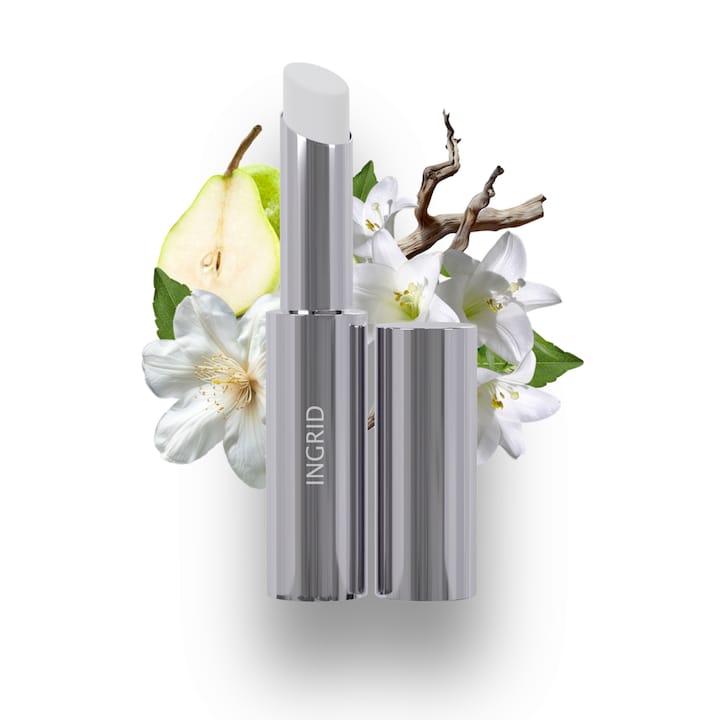
Apply to pulse points: wrists, the hollow of the throat, and behind the ears. Avoid rubbing your wrists together afterward — that breaks down the fragrance molecules and makes the top notes fade too quickly. A light press is enough to set the product.
Storage also matters for how long your solid perfume keeps its quality:
- Store cool and dark — direct sunlight melts the wax and can separate the oils.
- Close the lid properly between uses to prevent the scent from oxidizing.
- Avoid storing it in the bathroom, where humidity and temperature swings wear down the formula.
- Pack it in your carry-on without worry — a solid fragrance stick doesn't count as a liquid, so it isn't subject to airport liquid restrictions.
How to choose the right solid perfume for your needs
Choosing a scent is about more than which perfume smells best in the store. Four criteria make the choice easier:
- Match the fragrance family to your taste. Do you like citrus, woody, or floral notes? A sample kit lets you test several scents on your own skin before committing to a full-size product, since scent development varies from person to person.
- Verify vegan status. Check the wax source as described above, especially if beeswax is mentioned.
- Assess the packaging. Ask yourself whether it's plastic-free, recyclable, or refillable.
- Weigh price against fragrance oil concentration. A cheaper stick with a high share of carrier oil and a low fragrance oil content will last a shorter time than a pricier one with a more pronounced scent profile.
Why we make our perfumes the way we do
Some perfume makers build every scent around principles like a wax-based formula with no alcohol and no unnecessary water in production. That's not just a sustainability choice — it affects how the scent actually behaves on skin.
Some brands plant a tree for every order, and offer sample kits so you can try several scents before deciding. An honest label and a thoughtful formula should go hand in hand, not just serve as a marketing point.
— Axel
Recommended scents to start with
Want to try the format without betting on a single scent? Combo Set: Originals is a sample kit with several of Heyingrid's most popular scents in mini format, perfect for getting to know how wax-based perfume develops on your own skin.
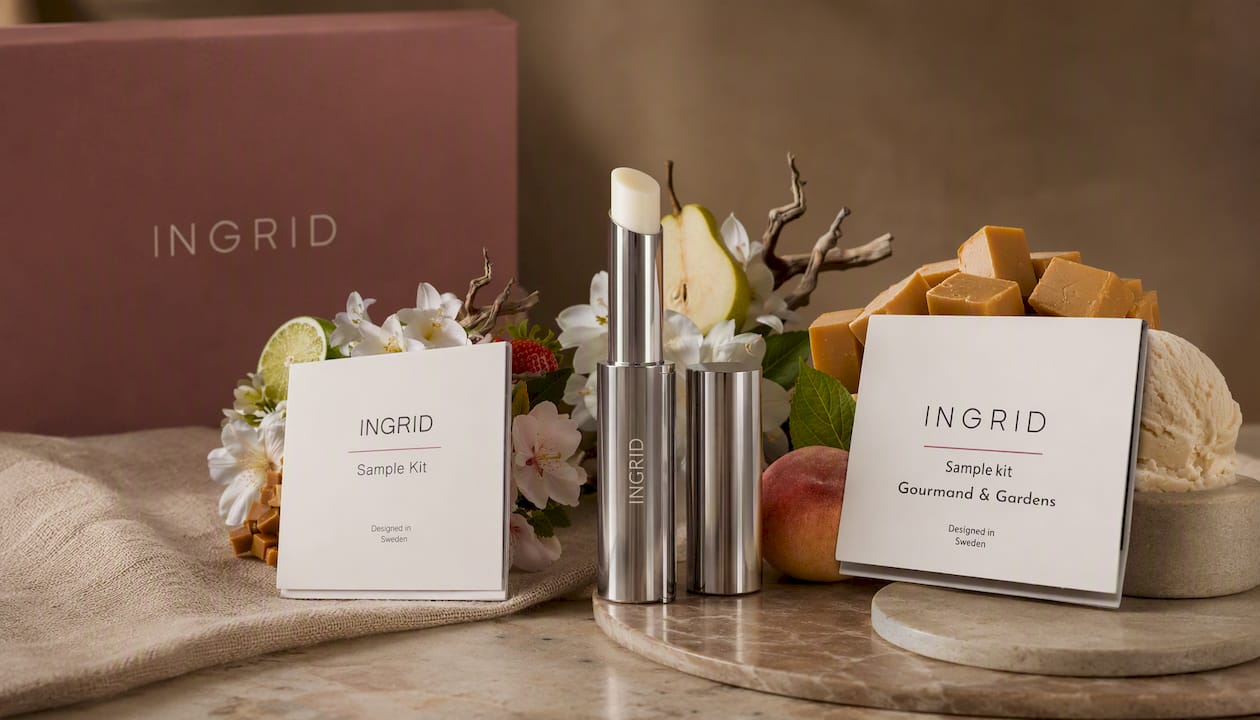
Want two distinct fragrance themes to switch between depending on the occasion? Combo set: Gourmand & Gardens combines sweeter, gourmand-inspired tones with green, garden-like notes — a good choice if you don't want to commit to a single profile. Already found your favorite and want to go straight to a full-size product? Scandinavian Breeze is all you need — a fresh, Nordic-inspired fragrance stick that works just as well at the office as on the trail.
All three are alcohol- and water-free, packaged without plastic, and every purchase means a tree gets planted. Start with the sample kit if you're unsure which fragrance family suits you — that cost is often deducted from your next full-size purchase. See the full range in Heyingrid's scent collection or read more about the company behind the scents.
Sources
Further reading on the mechanics of the format and skin-friendliness: how solid fragrance works, the environmental case for solid perfumes, and skin clinic ANF on alcohol-free products (Swedish source) for more on why alcohol-free formulas suit sensitive skin.
- Solid perfume: definition, differences, brands, and performance (Swedish source)
- Solid perfumes: an eco-friendly and practical alternative — Bougie & Senteur (Swedish source)
- What is solid fragrance and how does it work? | Full guide (Swedish source)
Frequently asked questions
What does "perfume label" mean for a solid perfume?
It refers to the ingredient list and packaging information on a wax-based fragrance stick, where you'll find the wax source, fragrance oils, and materials that determine whether the product is vegan and plastic-free.
How do I know if a solid perfume is vegan?
Check that the wax is plant-based, such as candelilla or carnauba, rather than beeswax, and that no animal-derived fragrance ingredients like musk appear in the ingredient list.
How much perfume should I apply for the best result?
A light layer on each pulse point is enough — warm the product between your fingertips first so the scent spreads more evenly and lasts longer.
Can I bring solid perfume on a plane?
Yes, solid fragrance sticks don't count as a liquid and are therefore not subject to airport liquid restrictions, which makes the format practical for travel.
Which solid perfume should I choose as a beginner?
Start with Combo Set: Originals from Heyingrid to try several scents in mini format before choosing a full-size favorite.