
For sensitive skin, the best choice is a fragrance-free option or a skin-friendly format: an alcohol-free, water-based spray, or a wax-based solid perfume with no water fillers. Always do a patch test before using a new scent regularly. Solid perfumes from brands like INGRID are a relevant option precisely because they contain no alcohol and no water, two of the most common causes of irritation.
In short:
- Fragrance-free, solid wax-based, and water-based or alcohol-free sprays are the most skin-friendly options for sensitive skin, while traditional perfume formats carry the highest irritation risk.
- Ingredients like ethanol, limonene, linalool, and concentrated essential oils can cause allergic reactions and should be avoided or chosen carefully, especially undiluted or in high concentrations.
- A patch test lowers the risk of skin reactions but doesn't fully protect against long-term or repeated exposure, and should be done on a test area before full use.
- Spray or apply scent to clothing, hair, or unbroken skin to reduce reactions, and use an unscented cream as a base to counter dryness and irritation.
- INGRID's wax-based solid perfumes are a skin-friendly option since they're alcohol- and water-free, with natural fragrance oils and a sustainability focus suited to sensitive skin.
Table of Contents
- Gentle perfume alternatives: solid, water-based, alcohol-free, or fragrance-free
- Ingredients and fragrance compounds to avoid
- How to do a patch test, step by step
- Practical application tips to minimize skin contact
- Why INGRID's wax-based solid perfumes are a relevant skin-friendly option
- Fragrance-free skincare alternatives when scent isn't right just now
- Preventive skincare routines that strengthen the skin barrier
- Natural essential oils: safer, but not risk-free
- What to do if your skin reacts to a scent
- Try INGRID: find the right scent without gambling
- A reflection on choosing scent with skin first
- Sources
Gentle perfume alternatives: solid, water-based, alcohol-free, or fragrance-free
Alcohol is the most common culprit when perfume feels harsh on the skin. Traditional eau de toilette and eau de parfum often contain a high percentage of ethanol, which dries out the skin barrier and worsens already sensitive skin. That's exactly why alcohol-free formats deserve a closer look.
Solid perfumes are built on wax, usually beeswax or a plant-based wax, blended with fragrance oils. Since they contain no alcohol or water, they release scent more discreetly and stay closer to the skin instead of penetrating to the same degree as a spray. That makes them a natural first choice if you react to classic perfumes.
Water-based or alcohol-free sprays are a middle ground. They don't dry out the skin the way alcohol-heavy perfumes do, but they often still contain fragrance compounds that can trigger a reaction in someone especially sensitive.
Sometimes fragrance-free is simply the safest choice, especially with eczema, rosacea, or a diagnosed contact allergy. Scandinavian scent profiles are often a good benchmark even then, since they traditionally build on clean, minimalist notes (Swedish source) rather than heavy, complex compositions.
Summed up, ranked by skin-friendliness:
- Fragrance-free – safest with active skin conditions or a known allergy.
- Solid wax-based perfume – no alcohol, minimal skin contact, suits most sensitive skin types.
- Water-based or alcohol-free spray – better than traditional perfume, but read the ingredient list.
- Traditional alcohol-based perfume – the highest risk of dryness and irritation.
Ingredients and fragrance compounds to avoid
Ethanol is the ingredient to watch for first. A high alcohol content dries out the skin, breaks down its natural protective film, and makes it more prone to irritation with repeated contact. Next come specific fragrance compounds that commonly cause allergic reactions.
- Limonene – found in citrus-scented perfumes, can become allergenic when it oxidizes on contact with air.
- Linalool – common in floral scents and lavender notes, carries the same oxidation risk as limonene.
- Concentrated essential oils – potent in undiluted form and can irritate fragrance-sensitive skin even in small amounts.
Label wording matters a lot. "Fragrance-free" means no perfume has been added, but the product may still contain fragrance oils for a subtle note. "Unscented" is the stronger promise: completely free of added scent (Swedish source), which makes the term more reliable if you react to almost everything.
Pro tip: Always read the INCI list, not just the marketing copy on the front. A shampoo labeled "fragrance-free" can still hide fragrance oils further down the ingredient list.
How to do a patch test, step by step
A patch test takes two days but saves you weeks of itching and redness. The method is simple, and all you need is the product and a little patience.
- Choose a test area. Apply a small amount of the scent to the inside of your forearm or the crook of your elbow, per the recommendation from 1177 (Sweden's healthcare information service).
- Wait out the reaction window. Leave the spot undisturbed for 24 to 48 hours without washing it off or covering it with clothing.
- Check your skin. Look for redness, itching, swelling, or small blisters. No visible reaction means the product is likely fine for you.
- Act on a reaction. Stop using the product immediately. If swelling is severe, blisters form, or you have trouble breathing, seek care the same day.
A patch test significantly lowers the risk, but it doesn't eliminate it entirely. Skin that's fine during a test can still react after repeated exposure over several weeks, so keep an eye on your skin even after a test goes well.
Practical application tips to minimize skin contact
Where you spray or apply the scent matters almost as much as what you choose. Several people with eczema describe in forum threads how they apply scent to clothing or hair instead of directly on the skin, specifically to avoid reactions.
- Spray onto clothing or hair rather than directly on skin when possible.
- Hold the bottle at least 15–20 centimeters from your body and avoid the face entirely.
- Moisturize your skin with an unscented cream before applying perfume, which counters dryness.
- Don't mix several scents in one day, and skip perfume on skin that's already red or irritated.
Small adjustments to your routine are often enough to enjoy scent without paying the price in itching and redness.
Why INGRID's wax-based solid perfumes are a relevant skin-friendly option
INGRID makes its perfumes from wax instead of alcohol and water, completely free of water fillers, with natural fragrance oils as the base. That makes them one of the clearest examples of a skin-friendly format that still delivers a genuine scent experience.
The format offers two concrete benefits for sensitive skin. Without alcohol, the most common drying factor is eliminated, and the wax base keeps the scent closer to the application site instead of spreading uncontrollably across skin and clothing. The result is a more discreet, slower scent release that many people with sensitive skin find gentler over a full day.
- Wax-based formula, free from alcohol and water fillers.
- Natural fragrance oils from plants rather than only synthetic aromas.
- A sample set is available, so you can try several scents at home before committing to a full size.
- A tree is planted for every order, part of the brand's sustainability profile.
Pro tip: Combine the sample set with the patch test above. Try a small amount of each scent from the sample set on the crook of your elbow before deciding which one becomes your favorite in full size.
Fragrance-free skincare alternatives when scent isn't right just now
Sometimes the answer isn't a milder scent, but no scent at all. If your skin is already inflamed, cracked, or in the middle of an eczema flare-up, fragrance-free skincare is the only reasonable choice until things calm down.
Look for skincare products labeled unscented rather than just fragrance-free, since the former term is a stronger promise of a total absence of fragrance compounds. Clean moisturizers with few ingredients, ideally without preservatives like MI or MCI, are a good foundation to build your routine on.
Many people choose to separate scent from skincare entirely: a completely neutral moisturizer morning and night, and scent only via clothing, hair, or a solid perfume applied to the wrists and neck instead of the face. That separation makes it easier to identify what's causing a reaction, since you're not mixing several scent sources at once.
Fragrance-free doesn't mean boring skincare. There are strong serums, creams, and cleansers completely free of added scent, you just need to look a little more carefully on the shelf or in the ingredient list.

Preventive skincare routines that strengthen the skin barrier
A strong skin barrier tolerates scent better than a damaged one. Before you start experimenting with new perfumes, it pays to build up your skin so it already has good conditions to resist mild irritation.
Moisture is the foundation. A ceramide-rich moisturizer morning and night keeps the barrier intact and reduces the risk of fragrance compounds penetrating deeper into the skin than they otherwise would. Avoid overly harsh cleansing, hot water, and scrubbing products during periods when your skin already feels tight or dry.
Introduce new products one at a time, not several at once. If you switch detergent, body lotion, and perfume the same week, it becomes impossible to know what caused a reaction if your skin starts responding.
Sun protection belongs here too. UV-damaged skin has a weakened barrier function and becomes more sensitive to fragrance compounds and other irritants for a period after exposure. Building up and protecting the barrier consistently, rather than only once something already hurts, reduces the chance that an otherwise gentle scent still causes a reaction.
Natural essential oils: safer, but not risk-free
Natural doesn't automatically mean harmless, and that's a common misconception. Essential oils like lavender, ylang ylang, and bergamot are heavily concentrated fragrance compounds, often more concentrated than the equivalent synthetic aromas in a regular perfume.
The advantage of essential oils in a solid perfume or a balm is that they rarely need alcohol as a carrier, the wax is enough. That makes the overall formulation gentler even if the oil itself is strong. The downside is that oils like bergamot and other citrus oils can make skin photosensitive, increasing the risk of pigment spots with sun exposure after application.
Undiluted essential oils applied directly to the skin are, in practice, one of the most common causes of contact dermatitis in otherwise fragrance-sensitive people. If a product contains essential oils, make sure the concentration is low and the oil is diluted in a carrier, like wax or oil, before it reaches the skin. The patch test applies just as much to natural oils as to synthetic scents; a common mistake is assuming that "natural" means you can skip the test.

What to do if your skin reacts to a scent
Redness, itching, or a small rash after using perfume calls for quick but calm handling. First: stop using the product immediately, even if the reaction seems mild.
Wash the area with lukewarm water and a mild, unscented cleanser to remove any remaining fragrance compounds from the skin. Avoid scrubbing, which often worsens the irritation. Then apply a thin layer of an unscented, moisturizing cream, ideally one with a simple ingredient list free of the added preservatives that tend to trigger reactions.
For intense itching, an over-the-counter hydrocortisone cream or an antihistamine can calm symptoms during the first day or two. If swelling spreads, blisters form, or you have trouble breathing, this is no longer a self-care matter, seek medical care the same day.
Note which product and which substance caused the reaction. Next time you shop for scent, check the INCI list against that note before buying; it's the simplest way to avoid the same reaction again.
Try INGRID: find the right scent without gambling
Trying a new scent often feels like a gamble when your skin is already sensitive. INGRID solves that with a sample set that lets you try several scents at home at your own pace before committing to a full size, with the cost deducted from a later purchase.
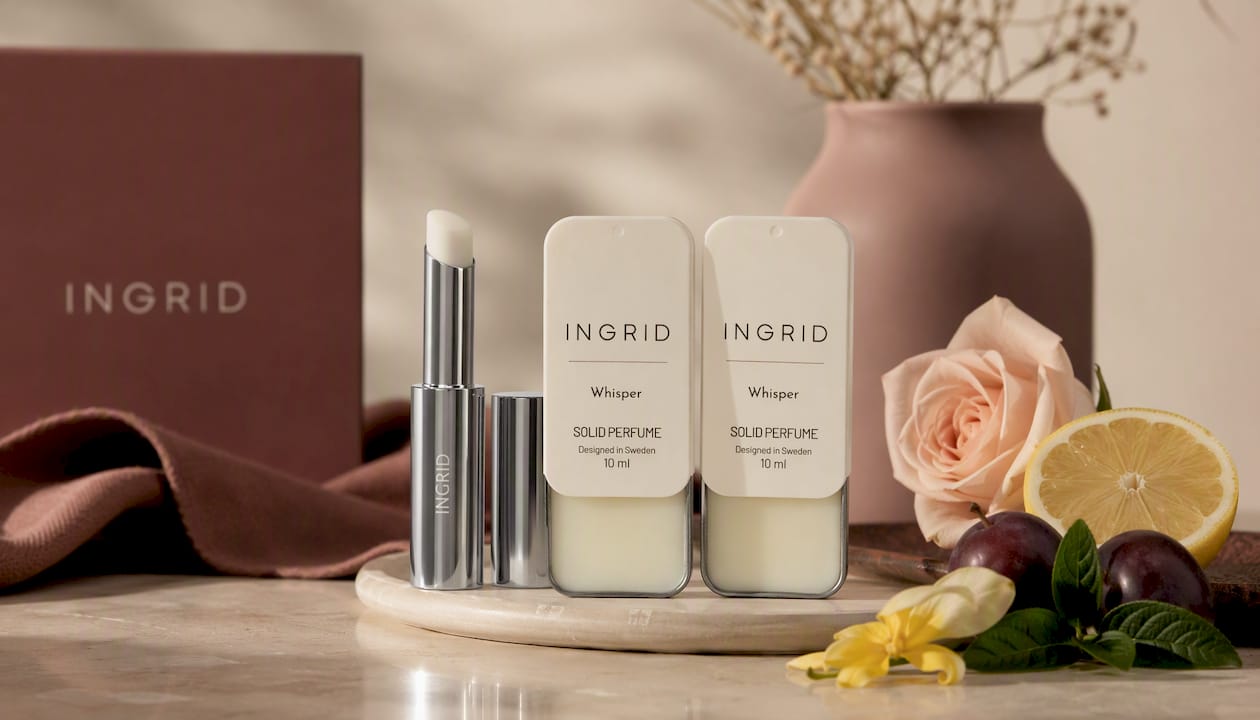
Among the range, Scandinavian Breeze suits you if you want a fresh, airy scent with a minimalist character, in line with the Scandinavian scent style often recommended for sensitive noses. Whisper is quieter and more discreet, a good choice if you want to wear scent without it taking over the room. Both are available as wax-based solid perfume, free from alcohol and water fillers.
Before moving to full size, do the patch test from earlier in this article on each of your favorites from the sample set. Some brands also tie their sales to environmental initiatives such as tree planting, which can turn choosing a skin-friendly scent into an environmental choice too. Order the sample set today and find your scent without gambling with your skin.
A reflection on choosing scent with skin first
I've been through the frustrating cycle myself of buying a perfume that smells amazing in the bottle, then regretting it three hours later when my skin starts to itch. It taught me to prioritize formulation over trend, alcohol-free and wax-based over the latest fashion house.
The most common misconception is that skin-friendly scent has to mean weak or boring scent. It doesn't. The difference lies in the carrier, not the scent strength, and that's where the attention should go first. Eco-friendly solid perfumes show that you can get both sustainability and a scent that actually lasts all day, without paying the price in irritated skin.
— Axel