
Amber scent is a warm, resinous perfume accord — not the smell of fossilized amber. The name refers to a fragrance character built from ingredients like labdanum, benzoin, and vanilla, not the stone you find on a beach. The term is also distinct from ambergris and ambroxan, which have entirely different origins. The rest of this article covers what actually builds the scent and how to choose the right format — perfume or home fragrance oil.
In short:
- Amber scent is usually a composition of labdanum, benzoin, and vanilla, not a raw-material story about fossilized amber.
- A true amber accord keeps its warmth and sweetness even after several hours, which helps you judge its authenticity.
- Skin perfume and home fragrance oils differ in concentration, labeling requirements, and ingredient lists, not in scent profile.
- Conventional "amber" scents are built on synthetic or plant-based accords rather than rare natural materials, for greater consistency and sustainability.
- Solid perfumes and wax-based oils can create the same warm, amber-like scent without alcohol, often with longer lasting power and more natural ingredients.
Table of contents
- What do amber, fossilized amber, ambergris, and ambroxan actually mean?
- Which notes build a classic amber scent?
- Perfume or home fragrance oil: where's the difference?
- How to combine amber notes for the best result
- INGRID's sustainable route to the same warm scent character
- Stop chasing "real" amber — chase the right accord
- Find your amber tone at INGRID
- Sources
- Frequently asked questions
What do amber, fossilized amber, ambergris, and ambroxan actually mean?
Four words, four different meanings, and they get mixed up constantly in product descriptions. Fossilized amber, the hardened resin from ancient trees, is in practice nearly odorless when it's simply worn as jewelry or used as decoration. It only releases a faint, resinous aroma when heated or burned, which is why it rarely appears as a raw material in perfume.
What the perfume industry calls "amber" is instead almost always an accord — a composed blend rather than a single ingredient. Lyko's fragrance glossary explains (Swedish source) that this accord is typically built from balsams like labdanum and benzoin, together with vanilla and wood, to create a full, warm scent. KICKS' fragrance expert (Swedish source) points out that the word "amber" is used inconsistently across the industry — sometimes it means a specific accord, sometimes a single ingredient, and sometimes it's pure marketing meant to signal luxury and warmth.
Ambergris is a third term, entirely distinct from fossilized amber. It's a wax-like substance from sperm whale digestion, extremely rare and now largely replaced by ambroxan, a synthetic or plant-derived substance with a similarly musky, woody scent profile. So the four terms share a warm character but represent completely different chemical and practical realities:
- Fossilized amber: hardened tree resin, in itself nearly odorless in everyday use.
- Amber in perfume: a composed accord of balsams, vanilla, and wood.
- Ambergris: rare animal-derived raw material, rarely used today.
- Ambroxan: synthetic or plant-based substitute with a musky, woody scent.
Which notes build a classic amber scent?
An amber scent is rarely a single raw material. It's a composition where several ingredients work together to create warmth, sweetness, and a powdery, resinous base. Fragrantica describes the profile (Swedish source) as sweet, resinous, warm, and often powdery, with labdanum, benzoin, and vanilla as the most common recurring building blocks.
Here's how the roles are typically divided in an amber accord:
- Labdanum gives the resinous, slightly leathery base many associate with classic amber.
- Benzoin adds sweetness and a soft, vanilla-like warm tone.
- Vanilla boosts the sweetness and makes the scent more gourmand and approachable.
- Balsams like Peru or tolu balsam deepen the scent and tie the notes together.
- Musk (synthetic in modern perfume) provides fixation, so the scent lasts longer on skin.
- Woody notes like cedarwood or sandalwood add structure and dryness against the sweet base.
Perfumers often prefer to build amber as an accord rather than chase rare natural materials, precisely because the result stays more consistent from bottle to bottle. An accord can be recreated exactly, while natural raw material quality varies between harvests and suppliers.
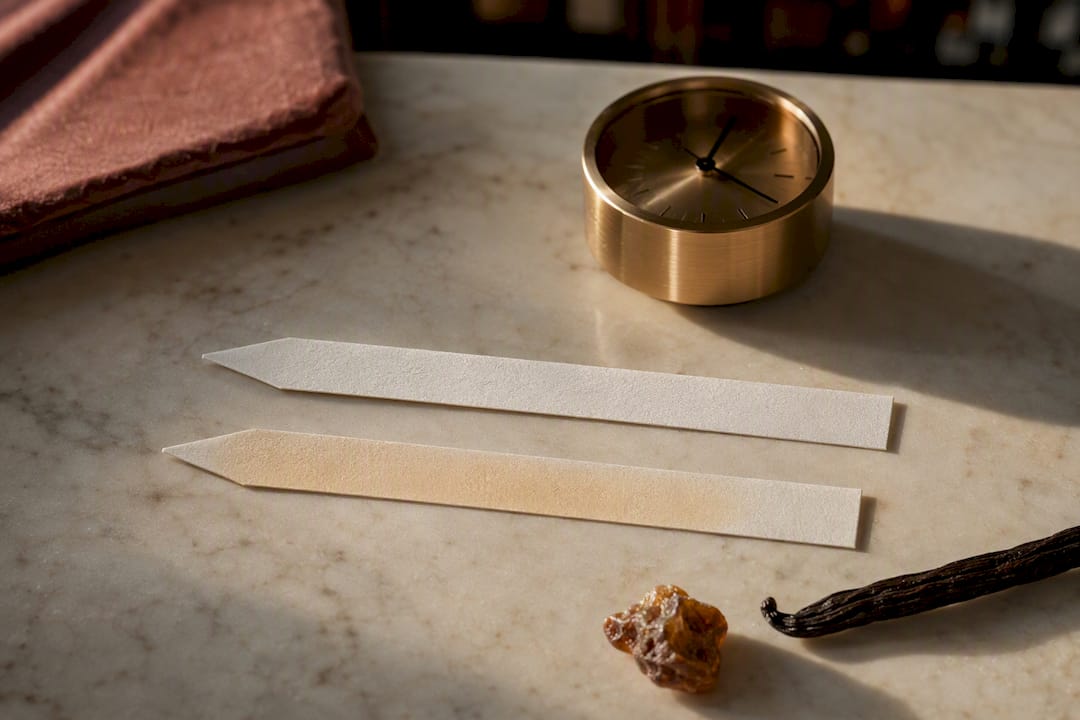
Pro tip: Want to test whether a scent is really built on an amber accord rather than just being labeled "amber" for marketing reasons? Smell it after three to four hours. A genuine accord with labdanum and benzoin holds onto its warmth and sweetness long after the lighter top notes have faded.
Perfume or home fragrance oil: where's the difference?
The same scent name can mean completely different products depending on where you encounter it. An amber perfume for skin is formulated to be safe on direct contact with the body, often at a lower concentration of aromatic compounds than a fragrance oil meant for a room. Home fragrance oils (Swedish source) blend natural and nature-identical oils to build the same warm, powdery, woody character, but they're aimed at soaps, candles, and diffusers rather than skin.
Here's what actually separates the two use cases in practice:
- Concentration: skin perfume is balanced for slow release close to the body; home fragrance oil is often stronger since it needs to spread through the air.
- Labeling: fragrance oils sold to consumers should list known allergens, such as citronellol, geraniol, and linalool.
- Phthalates: many fragrance oils are now marketed as phthalate-free, a clear selling point for health- and environment-conscious buyers.
- Dosage: candles and soaps often require specific percentages from the manufacturer, not free dosing by feel.
If you sell scented products, always check which labeling requirements apply. Sweden's Medical Products Agency (Läkemedelsverket) keeps a register (Swedish source) of companies selling skin-contact products via e-commerce, and it's worth understanding which rules apply to your situation before launching a product of your own.
How to combine amber notes for the best result
Amber is one of the most generous notes to build on, precisely because it's warm and round without dominating too hard. Spices like cardamom or cinnamon sharpen the scent and give it life, while more vanilla boosts the sweetness if you want a more gourmand expression. Leather and smoky woods pull the scent toward a darker, more masculine or unisex direction, while citrus notes on top lighten the whole and make it more summer-friendly.
When layering, one simple rule applies: put the stronger scent on first, closest to the skin, and add a lighter scent on top. An amber perfume usually works best as a base, since it's slower-moving and lasts longer than volatile citrus or floral scents.
- Combine amber with vanilla for a sweet, gourmand feel that suits evenings and colder seasons.
- Add cedarwood or sandalwood for more structure and a drier, less sweet profile.
- Try a light citrus top note for a fresher, more everyday interpretation.
Amber scents generally work well year-round but feel especially at home in fall and winter, thanks to their dense, warming character. Some of the ingredients, particularly synthetic musk and certain balsams, can cause skin reactions in sensitive individuals, so always test a small amount before using the scent broadly.
INGRID's sustainable route to the same warm scent character
You don't need alcohol-based spray to get the warm, resinous feel a good amber scent should have. Wax-based solid perfumes can be built on plant-derived fragrance oils, without water or alcohol as filler, which can give a denser, longer-lasting scent experience directly on skin.
The benefits go beyond the scent itself:
- Less spillage and no risk of a bottle breaking in your bag.
- Longer-lasting scent on skin thanks to the wax base.
- Natural ingredients without unnecessary fillers.
- A tree gets planted for every order.
Want to find your own take on a warm scent profile without guessing? INGRID's sample kits are a natural first step before committing to a full-size solid perfume.
Stop chasing "real" amber — chase the right accord
The most common misconception about amber scents is that a "real" version has to come from fossilized resin or rare ambergris. That's not true, and the hunt for authenticity often leads you astray. What actually determines whether a scent feels right is the balance between labdanum, benzoin, and vanilla, not the raw material's origin story.
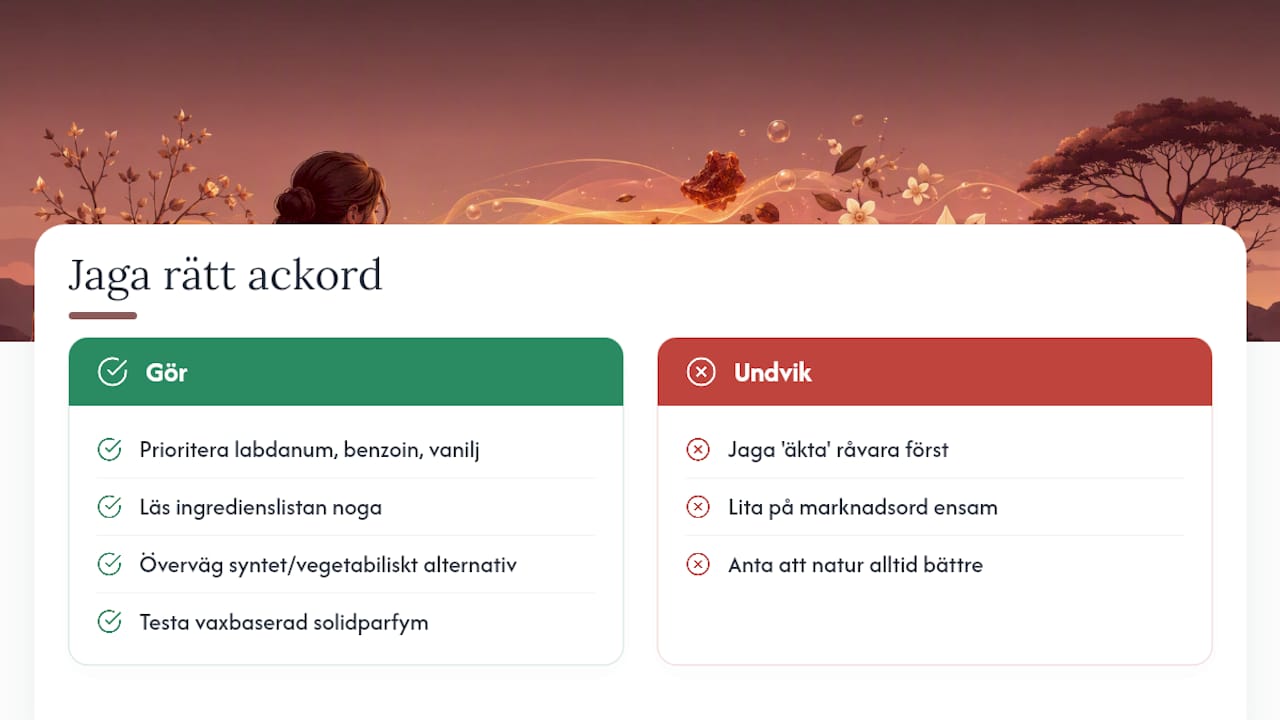
Conventional buying guides focus too much on wording like "natural" or "real amber" and too little on what's actually in the bottle. A synthetic musk or a plant-based ambroxan can deliver a more stable, more ethically sustainable scent than raw materials that are hard to trace or harvest responsibly. The same goes for format: a wax-based solid perfume without alcohol can carry an amber accord just as warm and just as long as a traditional spray — often longer on skin.
Prioritize the scent profile over the marketing language. Read which ingredients are actually listed, not just which word is printed biggest on the label.
— Axel
Find your amber tone at INGRID
Looking for a warm, resinous scent without alcohol or unnecessary water? Amber Peach by Laila Bagge is a natural starting point, with a sweet peach note layered over a classic amber base. Prefer something softer and more dessert-like? There's an alternative vanilla-and-caramel variant that leans more gourmand than resinous. Want something lighter and fresher with just a hint of warmth instead? Scandinavian Breeze is a better fit — a fresh, vegan stick perfume that works year-round.
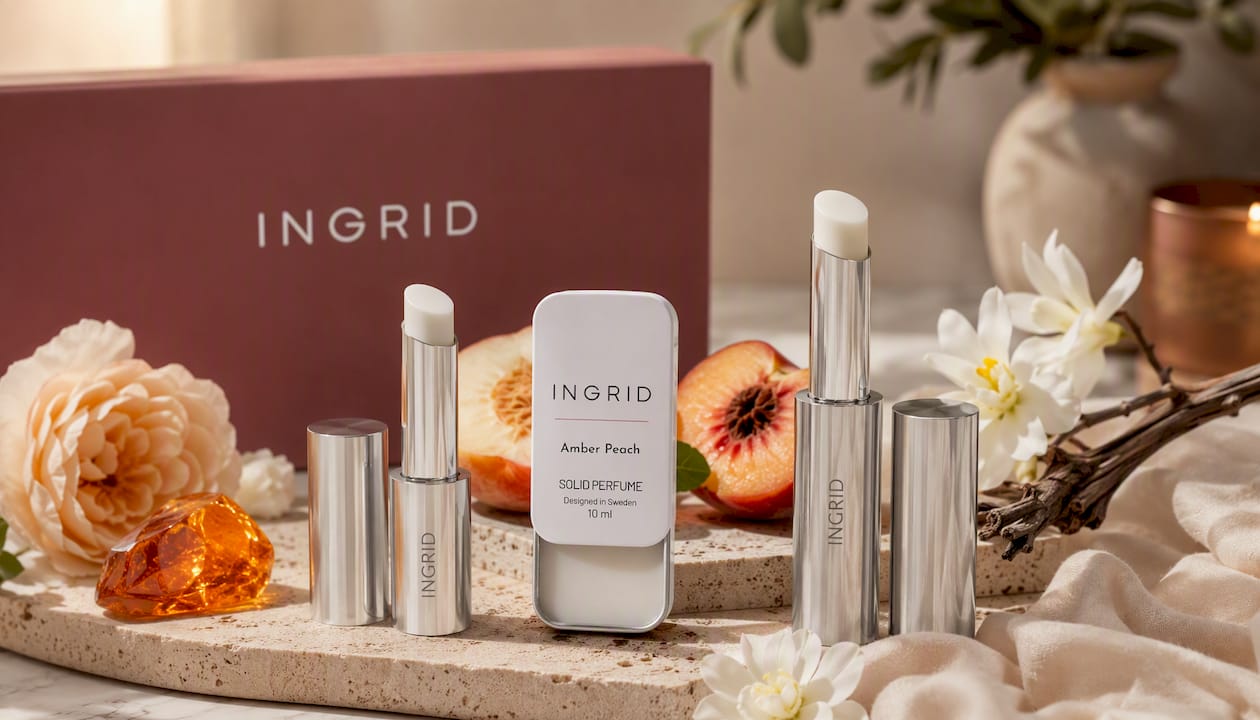
All three are available to try in smaller formats before you commit to a full-size solid perfume. Looking for a gift idea for someone who loves warm, personal scents? A sample kit works just as well as a gift as it does for yourself. Head to INGRID's product page for Amber Peach and order a sample kit to feel the difference from traditional spray perfume.
Sources
- Lyko's fragrance glossary: Learn all about amber (Swedish source)
- KICKS' fragrance expert explains: Amber perfume (Swedish source)
- Amber — and essential oils, Ambra grisea — Fragrantica (Swedish source)
- Amber fragrance oil, for making homemade soaps and candles (Swedish source)
Frequently asked questions
Is amber the same as fossilized amber?
No. There isn't an exact equivalent term, and the two get confused often. In a perfume context, amber is an accord of balsams, vanilla, and wood — not the fossilized stone.
What does amber smell like?
A typical amber scent is warm, sweet, resinous, and often powdery, built on ingredients like labdanum, benzoin, and vanilla. The character is described as full-bodied and long-lasting on skin.
What does ambergris smell like?
Ambergris has a deep, animalic, slightly marine tone that's hard to find commercially today due to its rarity. Most modern "ambergris" scents instead use synthetic substitutes to mimic the character.
What does ambroxan smell like?
Ambroxan has a dry, woody, lightly musky scent with subtle sweetness, less heavy than classic amber. It's often used as a fixative base in modern unisex perfumes, including scents like INGRID's Scandinavian Breeze.