
Yes, perfume can cause both skin contact allergy and fragrance sensitivity affecting the airways and eyes. There's no medical cure for fragrance sensitivity — avoidance and fragrance-free products are the main strategy. See a doctor if you get severe or persistent symptoms, or if you suspect a contact allergy and need to identify which substance is behind it.
In short:
- Most people with fragrance sensitivity should avoid perfume products, since there's no medical treatment for it, and contact allergy can cause serious skin reactions.
- In fragrance sensitivity, nerves in the airways, eyes, and skin react more strongly than normal to scents; allergy, by contrast, involves an immune reaction to specific substances.
- Common allergy-triggering substances include limonene, linalool, and HICC, but labeling of fragrance ingredients is often inadequate and can mislead consumers.
- To reduce exposure, switch to unscented products, save perfume for private occasions, and avoid spray perfume in shared spaces.
- Alternative formats like wax-based solid perfume can be a gentler choice, since they reduce airborne scent spread and undiluted chemical exposure.
Table of Contents
- What is fragrance sensitivity, and how does it differ from perfume allergy?
- Common symptoms of perfume allergy and how long they last
- Which substances in perfume most often cause allergic reactions?
- How to reduce exposure in everyday life
- When should you see a doctor for suspected perfume allergy?
- Living with fragrance sensitivity at work, at school, and socially
- Why wax-based perfume can be a gentler choice
- Author's perspective: consideration costs nothing, but requires knowing better
- Try a gentler alternative before you decide
- Sources
What is fragrance sensitivity, and how does it differ from perfume allergy?
Fragrance sensitivity, often called sensory hyperreactivity, involves nerves in the airways, eyes, and skin reacting more strongly than normal to scents, without the immune system being involved. Contact allergy to perfume is something different: the immune system reacts specifically to one or more fragrance substances that have landed on the skin, often with redness, itching, or eczema on exposed skin.
The distinction matters for how you manage the symptoms.
- With sensory hyperreactivity, simply switching fragrance ingredients doesn't help, since the nerves react to scent in general.
- With contact allergy, a patch test can pinpoint exactly which substance you're reacting to.
- Even natural fragrance compounds can trigger sensory hyperreactivity, which means “natural” doesn't automatically mean harmless for this group.
Common symptoms of perfume allergy and how long they last
Symptoms usually appear within minutes to an hour of exposure, but they can linger for several days even after a brief dose.
Airways: coughing, breathing difficulty, and a tight feeling across the chest are common in people with sensitive mucous membranes.
Eyes, nose, and throat: itchy, watery eyes, a stuffy nose, and hoarseness are among the most commonly reported issues.
General symptoms: headache, fatigue, and nausea often appear alongside the other symptoms, especially after longer exposure in, say, an office or a shop.
Pro tip: Note the date, location, and fragrance source whenever symptoms occur. A simple symptom diary makes it easier for a doctor to link the reaction to a specific exposure later.
There's currently no medical treatment that cures fragrance sensitivity itself, which is one reason the symptoms can become so disruptive to daily life.
Which substances in perfume most often cause allergic reactions?
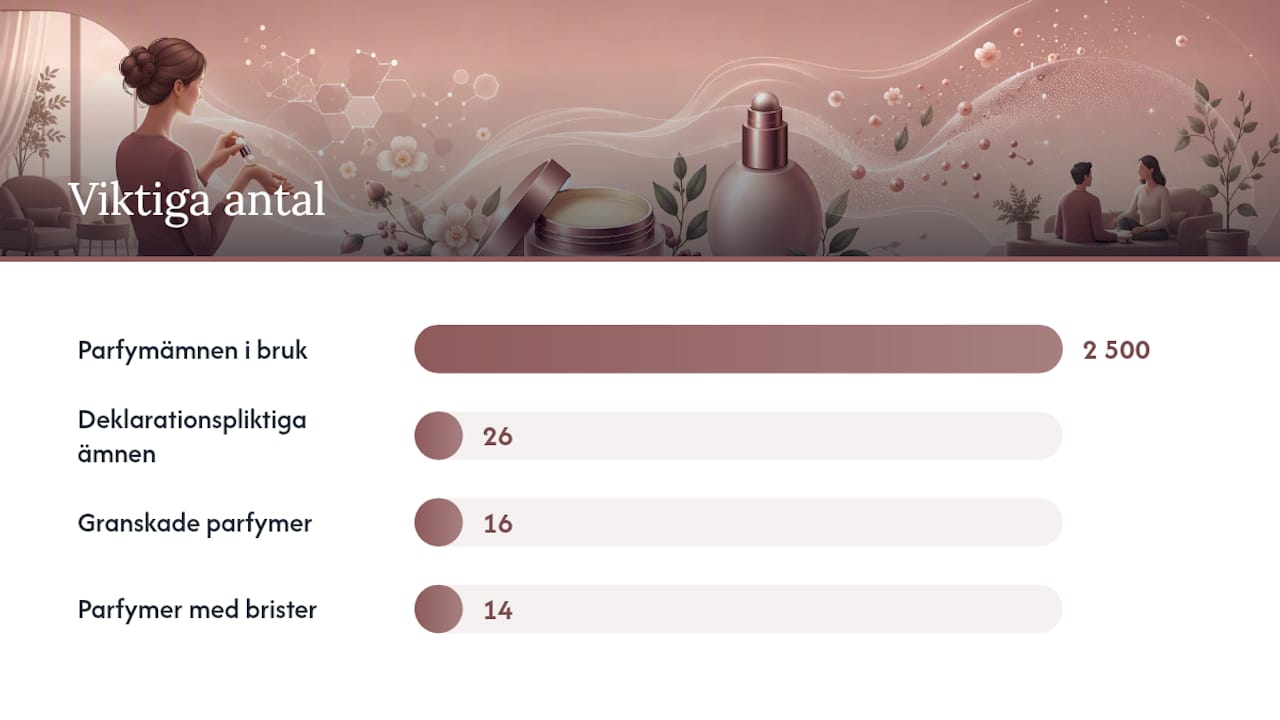
Roughly 2,500 fragrance substances are used in cosmetics today, and 26 of them must be declared on the label if present above a certain threshold. That's a fairly small share of all the substances that actually show up in an ingredient list, which makes it hard to know exactly what a perfume contains.
A few substances show up repeatedly as problems in the research:
- Limonene and linalool, common in citrus and floral scents, can oxidize and become more allergenic over time.
- HICC (hydroxyisohexyl 3-cyclohexene carboxaldehyde) is a known contact allergen that's been present in many skincare and perfume products.
- Several fragrance substances carry the H317 classification, meaning they can cause an allergic reaction on skin contact.
Regulatory oversight also shows that labeling doesn't always hold up. Sweden's Medical Products Agency reviewed 16 perfumes on the Swedish market and found serious deficiencies in 14 of them, including inadequate safety assessments and insufficient allergen declaration. That means you can't always trust a perfume is safe just because it's on the shelf.
How to reduce exposure in everyday life
You control more of your own scent environment than you might think, even if the people around you don't always consider it.
- Switch to unscented hygiene and household products. Laundry detergent, dish soap, and body lotion are often bigger fragrance sources than the perfume bottle itself.
- Look for a recognized fragrance-free/allergy-friendly label on products you buy. It sets requirements for both fragrance content and other substances that can trigger reactions.
- Save perfume for private occasions where you're not sharing air with others for extended periods, rather than wearing it to the office or on the bus.
- Avoid spray perfumes in shared spaces. The aerosol travels far and spreads through the air in a way that's hard to control.
- Air out and ventilate at home and at work if someone in the room recently used strongly scented products.
Pro tip: If you get acute symptoms, get to fresh air right away and rinse your eyes with cold water if they're itchy or watering. Wait to return to the same environment until the scent has fully cleared.
When should you see a doctor for suspected perfume allergy?
See a doctor if symptoms are severe, recurring, or disrupt sleep, work, or school over an extended period. That's especially true if you suspect your skin is reacting specifically to a product, not just your airways.
A workup usually includes:
- A targeted history, where a clinician reviews which products, environments, and situations precede your symptoms.
- A patch test, which checks your reaction against a range of standardized allergens, including several common fragrance substances.
- Referral to a specialist, such as an allergist or dermatologist, if symptoms are complex or the patch test gives unclear results.
The result rarely offers a simple cure, but it clarifies whether you have an identifiable contact allergy to avoid, or whether the issue is more general fragrance sensitivity, where avoiding scent broadly is the strategy.
Living with fragrance sensitivity at work, at school, and socially
Other people's lack of understanding about the difference between allergy and sensitivity is often what makes daily life hardest — not the symptoms themselves.
- Ask for a fragrance-free policy at work or in the classroom. Many employers adopt this without issue once the request is made concretely.
- Frame it practically: “I react to strong scents — can we keep this area fragrance-free?” works better than just asking people to be “considerate.”
- Choose unscented plants and cleaning products in shared spaces, since these are often a hidden fragrance source few people think about.
- Avoid isolating yourself socially. Suggest outdoor activities or well-ventilated spots instead when meeting friends who wear perfume.
Awareness campaigns around fragrance sensitivity show that small changes in product choices by the people around you make a big difference for someone living with these issues daily.
Why wax-based perfume can be a gentler choice
A spray perfume fills the room with aerosol that others breathe in, regardless of whether you personally tolerate the scent. A wax-based solid perfume is applied directly to the skin with a finger, with no alcohol and no spraying of fragrance compounds into the air around you. That reduces the airborne spread that often triggers reactions in others sharing the room.
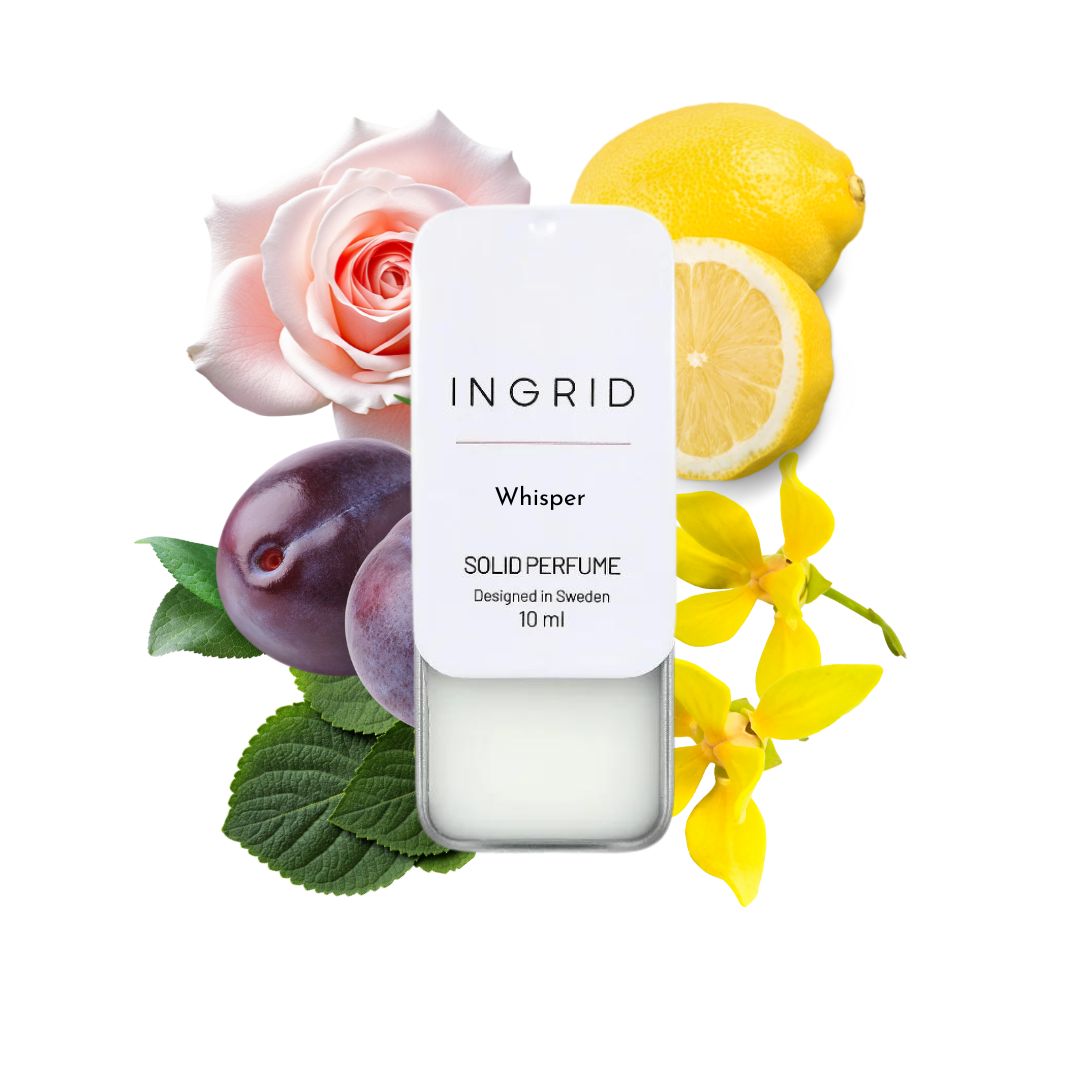
INGRID makes perfumes on this principle: a wax-based formula, no alcohol, real essential oils, and plastic-free packaging. Every purchase also means a tree gets planted. That doesn't make the product a medical solution for allergies, but the application method may be relevant if you want to try an alternative with less spread. A vegan perfume stick is one example of how the format works in practice. Always test a small amount on a limited patch of skin first, regardless of the product.
Author's perspective: consideration costs nothing, but requires knowing better
What surprises me most reading the regulatory reports isn't that perfume can trigger symptoms — it's how often labeling falls short despite clear rules. That makes it harder for people already affected to protect themselves.
Choose unscented where you share space with others, and try gentler alternatives after aesthetic treatments before writing off perfume entirely. If you have questions about the content, reach out — I'm happy to dig further into the topic with you.
— Axel
Try a gentler alternative before you decide
INGRID is an option for anyone who wants to wear scent without a spray bottle's airborne spread and without alcohol in the formula. The difference from a regular perfume bottle is the application: the wax goes directly onto pulse points with a finger, so less scent is released into the room around you.
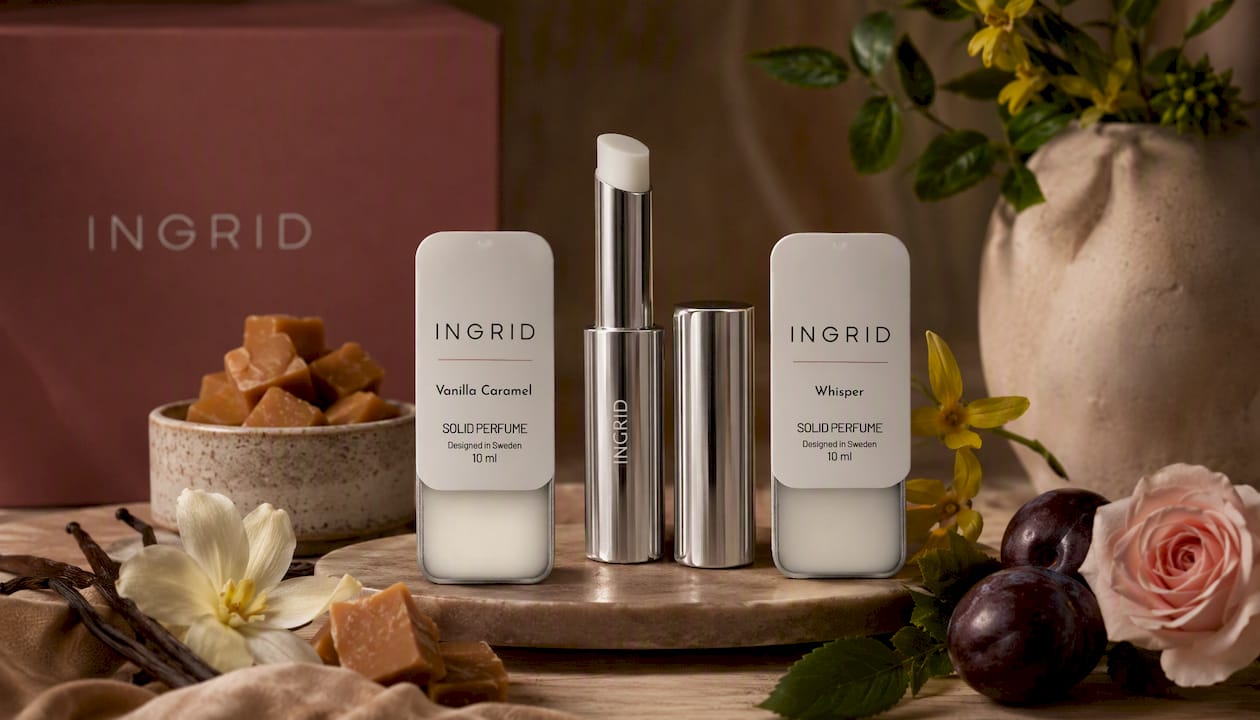
If you like sweeter, warm tones, Vanilla Caramel is a good first choice, built on the same alcohol-free base as the rest of the range. Prefer something softer and more discreet? Whisper is a natural next one to try.
The easiest way in is a sample kit. You test several scents at home in your own environment before committing to a full-size product, and the cost is often deducted from a later purchase. That reduces the risk of spending money on a scent that doesn't work for you. Order a sample kit with several scents and see which one feels right.
Sources
Want to go deeper? Sweden's Asthma and Allergy Association is a good starting point for advice and campaigns on fragrance sensitivity. 1177 (the Swedish healthcare guide) covers symptoms and when to seek help. Karolinska Institutet outlines which fragrance substances are in use and how they're classified, while Sweden's Medical Products Agency monitors the safety of perfumes on the Swedish market. If you're unsure about your own symptoms, always consult a healthcare provider.
This article is general information, not a substitute for advice from a qualified doctor. Consult a qualified healthcare professional about your own circumstances before acting on anything here.
- Fragrance sensitivity | Astma- och Allergiförbundet (Swedish source)
- Fragrance substances | Karolinska Institutet (Swedish source)
- Serious deficiencies in perfumes on the Swedish market | Läkemedelsverket (Swedish source)