
Yes, but with care. Spray perfume on clothes when you want the scent to last longer, or if your skin is sensitive to alcohol, but always test on a hidden spot first. Avoid silk, velvet, and light-colored fabrics, keep a reasonable distance of about an arm's length, and aim the spray at the inside or lining rather than the outside of the garment.
In short:
- Perfume sprayed on fabric can last longer because fibers hold scent better than skin does, especially on cotton, linen, and wool.
- Especially delicate materials like silk and velvet are more prone to permanent staining from oily or colored fragrance compounds, which calls for precautions.
- To avoid discoloration, always test on a hidden spot first and aim the spray at the inside of the garment from an even distance.
- Alcohol-based perfumes can cause irritation and damage on certain fabrics, while wax-based solid perfume is a lower-risk alternative with no staining risk.
- Both spraying on skin and on clothes work, but a combination gives the best scent experience and longevity.
Table of contents
- Benefits of perfume on fabric
- Risks: stains, discoloration, and fabric damage
- How to apply perfume to clothes without damaging them
- How to remove perfume scent and stains from clothes
- INGRID and solid perfume as a lower-risk alternative
- My take: skin or clothes, it depends on the occasion
- Try the scent before you wear it
- Sources
- Frequently asked questions
Benefits of perfume on fabric
Scent binds to fibers differently than it does to skin. Fabric has no natural moisture or warmth to break down fragrance molecules, so a spray on a sweater or scarf can linger long after skin perfume has faded. That's also why an old scarf or jacket sometimes still carries a faint hint of scent days after it was last worn.
If you have sensitive skin, applying to fabric is often the easiest way to wear scent without irritation. Alcohol-based perfumes can dry out or irritate skin, especially with repeated daily use on the same pulse points. Spray on clothes instead and you skip that contact entirely.
Some materials absorb and hold scent better than others:
- Cotton and linen have an open fiber structure that absorbs fragrance oils evenly.
- Wool holds scent unusually long thanks to its natural structure, but can also pick up unwanted odors just as easily.
- Denim holds scent well and usually tolerates a light mist without issue.
- Synthetic fibers like polyester tend to hold scent more on the surface, which makes it fade faster but also easier to wash out.
The difference in scent experience between skin and fabric is real. On skin, a perfume's top, heart, and base notes develop in stages because body heat drives the process. On fabric, that development happens more slowly and is often more muted, which can make the scent feel more one-dimensional but also longer-lasting.
Risks: stains, discoloration, and fabric damage
Perfume can discolor fabric, and it's rarely the alcohol itself that's to blame. The problem lies in the oily and colored components of the fragrance compound: certain natural extracts and synthetic aroma oils have a yellowish or brownish tint that becomes visible on light fabrics over time.
Some fabrics carry more risk than others. Be especially careful with:
- Silk, which is sensitive to both alcohol and oily substances and can stain permanently.
- Velvet, where the fibers absorb liquid unevenly and create visible shadows.
- Light and white garments, where even microscopic discoloration shows immediately.
- Certain synthetic fibers that react chemically with alcohol and can stiffen or develop a glossy mark.
Another common mistake is spraying the exact same spot every time — always the center of the chest, say, or the same cuff. Repeated spot application builds up a concentration of fragrance oil in a small area, which increases the risk of discoloration and, in the worst case, permanent damage to the fibers.
Always test on a hidden area before spraying the garment you're actually going to wear, such as the inside of the hem or a corner of the lining. Wait a few minutes and check that no mark appears before continuing.
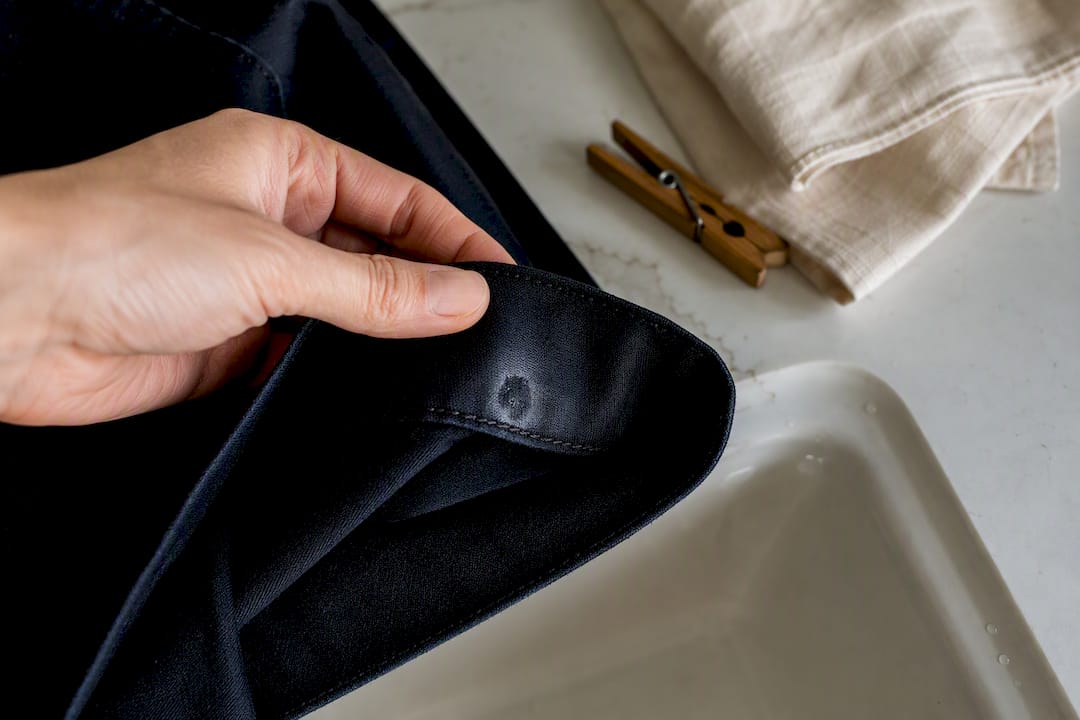
Pro tip: If you're unsure about a garment, spray the perfume into the air in front of you and walk into the scent cloud instead of aiming the spray directly at the fabric. You get the same effect without any liquid landing concentrated on one spot.
How to apply perfume to clothes without damaging them
The right technique makes all the difference between a scent that lasts beautifully all day and a garment with a stain you regret. Follow these steps:
- Test on a hidden spot. Spray once on the inside of a hem or a corner of the lining and wait at least ten minutes before judging the result.
- Keep the right distance. Aim from 20–30 centimeters away and spray in a sweeping motion, not a stationary cloud on one spot.
- Aim at the inside when possible. The inside of a collar, a jacket lining, or the inside of a scarf takes the scent without any mark showing on the outside.
- Adjust the amount to the concentration. An Eau de Parfum has a higher share of fragrance oil than an Eau de Toilette, so one or two sprays are often enough where you'd otherwise need three or four.
- Layer with skin application. Spray pulse points like the wrists and neck, then add a light mist over the clothes. The combination gives both fast scent development from the skin and longer presence from the fabric.
- Vary the spot each time. Spraying the same place on the same jacket every time builds up wear and discoloration risk over time. Rotate between the inside of the sleeve, the lining, and the collar.
The order matters. Many people spray perfume last, as a finishing touch before heading out. That works, but if you know you're wearing a delicate garment, it's safer to spray the clothes before putting them on, while they're still on the hanger. That way you spot any marks before the fabric touches your skin, and you avoid breathing in a dense scent cloud up close.
Pro tip: Always spray clothes before jewelry or bags with leather or metal details get in the way. Alcohol and fragrance oils can discolor leather and lightly corrode certain metal coatings if you spray too close.
Also consider the fabric's thickness. A thin cotton or linen piece absorbs scent quickly and can become saturated after just one spray, while a thick wool cardigan can handle more without feeling overscented. Adjust the number of sprays to the material, not just your usual routine.
How to remove perfume scent and stains from clothes
Always start by washing the garment according to the care label. It sounds obvious, but many people skip that step and jump straight to home remedies, which rarely solves the problem on its own.
If the scent lingers after a normal wash, soaking in vinegar can help. The Swedish Society for Nature Conservation (Naturskyddsföreningen) recommends about 200ml of vinegar per 10 liters of water (Swedish source) for fifteen to twenty minutes before running a normal wash. The method works well against musty odors trapped in fibers, but it's a complement to washing, not a replacement.
Vinegar and baking soda are often used as home remedies against lingering scent, but they rarely remove bacteria at a deep level (Swedish source), even though they can neutralize lighter odors. Baking soda absorbs and dulls scent but won't dissolve grease or heavy perfume oil that has already penetrated the fibers. Excessive use of vinegar can also affect a washing machine's rubber parts over time.
A few practical guidelines to keep in mind:
- Drying outdoors in sunlight can help reduce bacteria and freshen up a garment as a final step after washing.
- Cotton and linen are usually easier to clean of scent and odor issues than synthetic materials (Swedish source), since synthetic fibers hold oils closer to the surface in a way that makes them harder to wash out completely.
- Avoid combining several odor-removal methods at once (for example, strong detergent plus vinegar plus baking soda in the same wash), since that rarely improves the result and increases wear on the fabric.
If the garment has a visible stain from oily perfume components, treat that stain separately before the full wash. A general rule: the faster you act after a stain appears, the better the chance it comes out completely.
INGRID and solid perfume as a lower-risk alternative
Traditional spray perfumes rely on alcohol and often water as a filler — exactly the ingredients that raise the risk of discoloration on delicate fabric. Heyingrid built its perfumes a different way: vegan, wax-based solid perfumes completely free of alcohol and water fillers.
That has practical consequences if you're worried about your clothes:
- Without alcohol in the formula, the risk of the kind of stains and discoloration that occur when alcohol-based spray meets delicate fabric like silk or light-colored material is reduced.
- The wax base is applied directly and locally, so you control exactly where the scent goes instead of spreading a cloud over the whole garment.
- The formula is gentle on skin, which makes solid perfume a reasonable first choice if you already know alcohol-based sprays irritate your skin.
- Every purchase helps plant a tree, making the choice more sustainable beyond the question of stains and scent.
That doesn't make solid perfume a universal solution for every fabric type, but it removes one of the most common risk factors from the equation entirely.
My take: skin or clothes, it depends on the occasion

I rarely pick just one of the two. On a regular workday, I spray my pulse points and then add a light mist over my sweater, since that gives me both the fast scent development from skin and the longer presence from fabric. Going out in the evening, in a garment I don't know as well, I'd rather stick to skin only until I've had a chance to test the fabric calmly beforehand.
The one rule I never break is the hidden-spot test. It takes ten seconds and can save a garment you might not be able to replace.
— Axel
Try the scent before you wear it
One way to avoid stains altogether is to choose perfumes without alcohol and water fillers, which can reduce the discoloration risk that otherwise comes with regular spray perfume on delicate fabric.
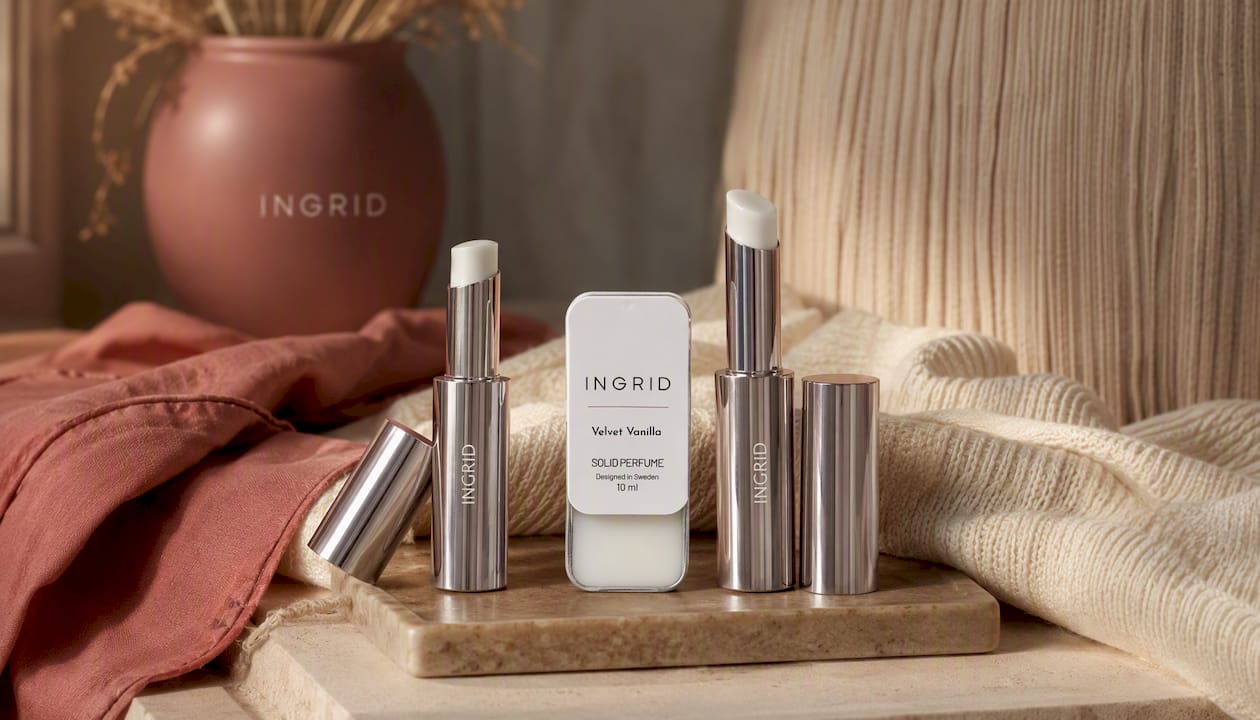
The scent Scandinavian Breeze is built on a wax-based stick formula you apply directly, without risking a cloud over the whole garment. Want something warmer and sweeter? Velvet Vanilla is an option with the same alcohol-free base and the same low staining risk. If you have sensitive skin and already know traditional sprays irritate it, a wax-based perfume applied locally can be an alternative to experimenting with spray distance and fabric tests every time.
Not sure which scent suits you best? Order a sample kit and test several scents at home at your own pace. Want to wear scent without it ever touching fabric at all? A scented hand cream from our partner is worth trying as a complement. If you want to dig deeper into how to care for different materials over time, there's also a good fabric care guide worth a read.
Sources
- Getting rid of musty odor in clothes — Naturskyddsföreningen (Swedish source)
- Do vinegar or baking soda actually remove odor from clothes? — Knappnålen (Swedish source)
- How to remove bad odor from clothes — Soyaconcept (Swedish source)
Frequently asked questions
How do you get perfume out of clothes?
Wash it first according to the care label. If the scent lingers, you can soak the garment in about 200ml of vinegar per 10 liters of water for fifteen to twenty minutes before washing.
How do I remove a sour or musty smell from clothes?
Soaking in vinegar before washing is one of the most tried-and-true steps against musty odor, and drying in sunlight afterward can help reduce remaining bacteria.
How do I remove perfume smell when detergent isn't enough?
Try an extra rinse cycle with vinegar in the washing machine's rinse compartment, and avoid combining several odor-removal agents in the same wash, since that rarely improves the result.
How do you quickly get rid of a strong perfume smell?
Air the garment outdoors in sunlight for a while before washing. It won't solve everything on its own, but it dulls the strongest scent and makes the following wash more effective.
Is it better to spray perfume on skin or on clothes?
Both have their place. Skin gives faster scent development thanks to warmth, while clothes hold the scent longer. A combination of a light mist on the garment and perfume on pulse points often gives the best overall result.
Can solid perfume be used on clothes without risk?
A wax-based, alcohol-free solid perfume like Heyingrid's reduces the risk of discoloration compared with regular spray perfume, but always test on a hidden spot first, whichever perfume you use.